
The Gaia NIR mission and the engagement of the Spanish Community, 28-30 January 2026, Sevilla, Spain

Gaia NIR is an ESA astrometric mission in the near IR, candidate for the ESA Voyage 2050 L5 launch slot. The main goals are to explore the previously inaccessible components of the Galaxy, obscured by dust, in the near-IR and to achieve a significant improvement in parallaxes and, most importantly, in proper motions by combining Gaia's epochs with new observations over a 20-year period.
The Spanish industry and scientific community, fully involved in the Gaia mission, joined in this meeting to discuss the technical and scientific challenges of Gaia NIR. The most updated design and status of the Gaia NIR mission will be addressed by the international core team.
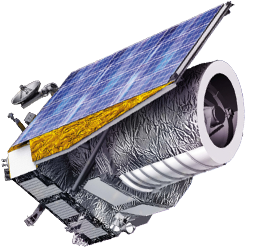
Prof. Eduardo Martín, SUBSTELLAR projec principal investigator, and one of the two Euclid mission Independent Legacy Scientists, attended the meeting and presented an invited talk "The Euclid mission in the context of the Gaia NIR mission ".
ESA's Euclid mission is designed to explore the composition and evolution of the dark Universe. The space telescope will create a great map of the large-scale structure of the Universe across space and time by observing billions of galaxies out to 10 billion light-years, across more than a third of the sky. Euclid will explore how the Universe has expanded and how structure has formed over cosmic history, revealing more about the role of gravity and the nature of dark energy and dark matter.
Both the Gaia and Euclid missions are designed to perform large-scale mapping in the near infrared. They complement each other because they operate at different epochs and will collect different types of data, which are both essential for studying substellar objects.
More details at The Gaia NIR mission and the engagement of the Spanish Community